
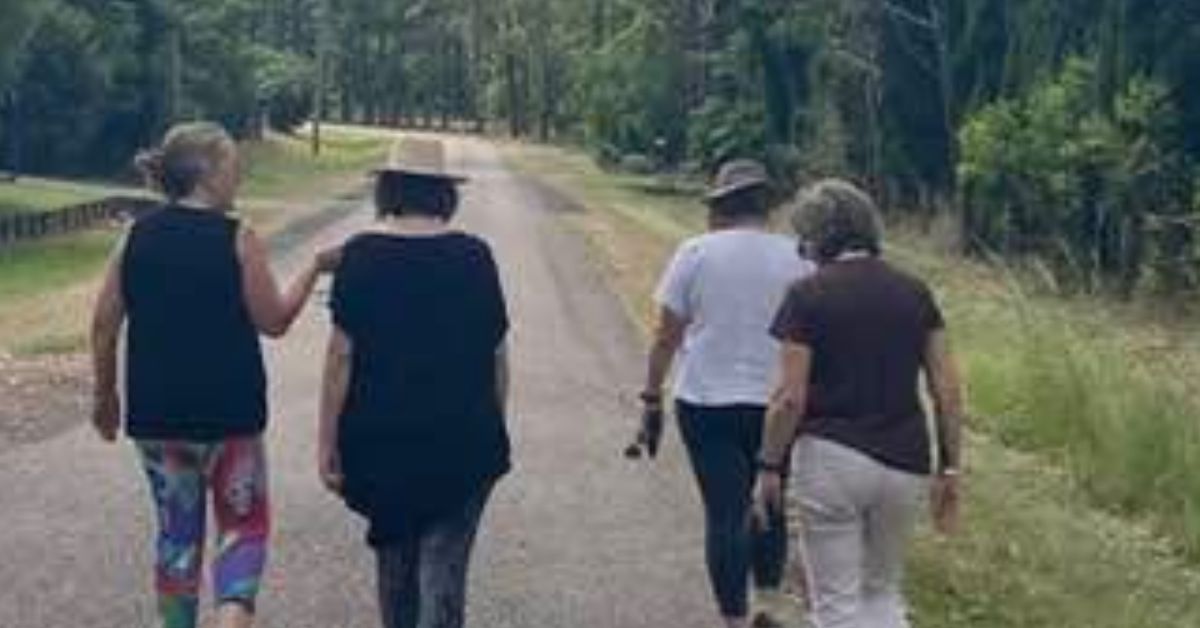
Recently, we welcomed a group of lifelong friends to the Sanctuary for a girls’ weekend, including our co-founder Sharalyn, who gathered to support one of their own navigating the loss of someone she loves.
Over three gentle days, they slowed down together.
They wandered through the historic streets of Morpeth.
They shared a joyful Brush & Bubbles creative session.
They made space for long conversations, laughter, and quiet moments.
It was the kind of weekend that reminds you how powerful it is to be surrounded by women who know you — who don’t need explanations, who simply sit beside you in whatever you’re carrying.
And while the weekend was about friendship and support, it also created something more.
A Stay That Gives Back
Their time at the Sanctuary helped support:
9 nights of sanctuary for women experiencing grief, loss, trauma, or deep exhaustion.
Nine nights where another woman can arrive weary, place her bags down, take a breath, and feel the quiet relief of being somewhere safe and supported.
This is the ripple that happens here.
Women gathering together and, in doing so, helping another woman find her way forward.
The Impact of Women Supporting Women
Behind every stay, there is a deeper layer of support unfolding.
In recent months, we’ve seen just how powerful this model can be:
- 85% of stays over the December and January holiday perioed were sponsored, ensuring women could access support during what can be one of the most emotionally difficult times of the year.
- Around 30% of all stays to date have been funded through our Angel Sponsorship Program, removing financial barriers for women who need it most.
Each booking, each retreat, each weekend away contributes to this growing circle of care.
It means that when one woman chooses to come, another woman is given the opportunity to rest, to breathe, and to begin again.
A Different Kind of Getaway
What we see time and time again is this:
A weekend away can be more than a break.
It can be a contribution.
A quiet act of generosity.
Whether it’s a group of friends coming together, a retreat facilitator holding space, or a woman choosing to prioritise her own wellbeing — every stay helps extend support to someone else.
And that’s something truly special.
If you’ve been thinking about gathering your own group, or simply taking time away, know that your stay creates more than just space for yourself.
It creates space for another woman, too.